Giants, Salt, and Spirits: How to Watch Sumo (Even if There is No Tournament)
You’ve seen them on TV. Giant men in loincloths pushing each other. But seeing Sumo in real life? It shakes the ground.
Sumo is Japan’s national sport. But it is also a Shinto ritual. The referee looks like a priest. The wrestlers throw salt to purify the ring. They stomp their feet to scare away evil spirits. It is ancient, intense, and surprisingly fast.
“But I heard tickets are impossible to get!” Don’t worry. As your friend, I’m here to show you how to experience the world of Sumo, no matter when you visit.
1. The “Basho” (Grand Tournament) Schedule
Professional Sumo tournaments are held only 6 times a year. Each lasts for 15 days.
- January: Tokyo (Ryogoku)
- March: Osaka
- May: Tokyo (Ryogoku)
- July: Nagoya
- September: Tokyo (Ryogoku)
- November: Fukuoka
If your trip aligns with these dates: Buy tickets online immediately (about 1 month in advance). The atmosphere is electric. Fans yell, throw cushions (rarely, but it happens), and eat Yakitori and beer while watching.
2. The “Morning Practice” Hack (Free!)
“I’m visiting in April/June/August. There is no tournament!” Don’t cry. You can actually see something even more intimate: Morning Practice (Keiko).
Sumo wrestlers live and train in “Stables” (Beya). Some stables allow tourists to watch them practice in the morning.
- The Famous Spot:Arashio-beya (in Tokyo, near Hamacho).
- They have a large street-facing window. You can stand outside on the street and watch the wrestlers slam into each other just a few meters away.
- Cost: Free.
- Time: Usually 7:30 AM – 10:00 AM. Go early!
- Rule: Be silent. This is serious training, not a show. No flash photography.
3. Eat Like a Giant: “Chanko Nabe”
Whether you see a match or not, you MUST eat the food. Sumo wrestlers eat massive amounts of a special hot pot called “Chanko Nabe.”
- What is it? A huge pot of broth filled with chicken balls, pork, tofu, and mountains of vegetables. It is healthy, protein-packed, and incredibly delicious.
- Where to eat: Go to the Ryogoku area in Tokyo (Sumo Town).
- There are many restaurants run by retired wrestlers (look for “Chanko” signs).
- Friend’s Recommendation: “Chanko Kawasaki” or “Kappo Yoshiba” (which actually has a sumo ring inside the restaurant!).
4. The Rules of the Ring
If you do watch a match, knowing these three things makes it 10x more fun:
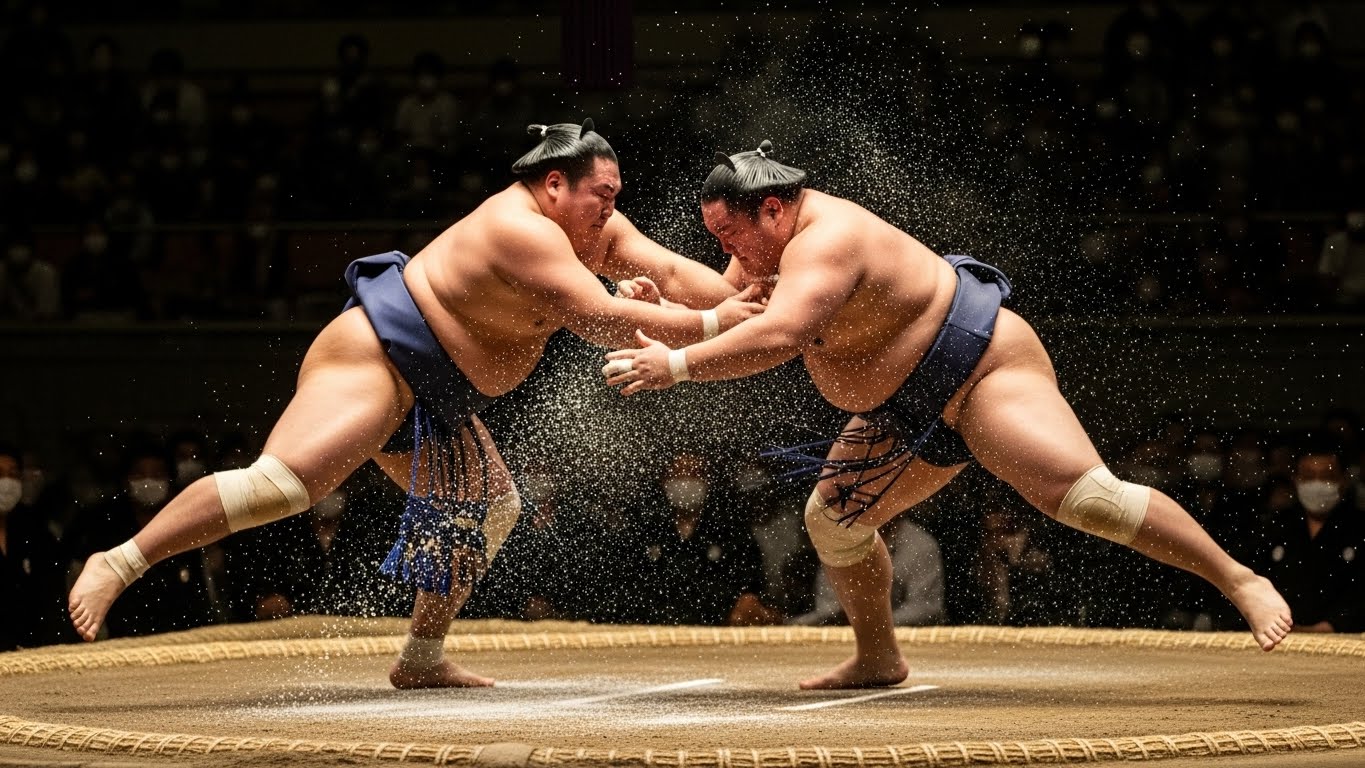
- The Salt: Before fighting, they throw salt to purify the ring. Some wrestlers throw a HUGE amount (like a salt explosion). The crowd loves this.
- The Stare Down: The fight only lasts 10 seconds, but the mental battle lasts 4 minutes. They squat, stare, stand up, slap their bellies, and squat again. The tension builds… and builds… until—BOOM.
- The Slap: They don’t punch; they slap with open palms. The sound of skin hitting skin echoes through the stadium.
5. Souvenirs?
In Ryogoku, you can buy funny Sumo goods.
- Sumo face masks.
- Chocolate shaped like wrestlers.
- T-shirts. It’s a fun, quirky gift that screams “I went to Japan.”
Summary: A Heavy Experience
Sumo is deeply Japanese. It respects tradition, hierarchy, and discipline. Whether you are cheering in a stadium with a beer in hand, or quietly watching through a window at 8 AM, you will feel the power of history.
Want to guarantee a Sumo experience or have a guide explain the complex rituals as they happen? Our Sumo Tours can arrange tickets, practice visits, and a Chanko lunch with a retired wrestler! Let’s go get big.