Cash is King? The Truth About Money in Japan (Don’t Panic!)
You’ve read the old guidebooks. They all say the same scary thing: “Japan is a 100% cash society. Credit cards won’t work. Bring lots of cash.”
So, you’re imagining walking around Tokyo with $2,000 stuffed in your socks, terrified of losing it.
As your friend, let me give you the 2025 update: Relax. It’s changed. (Mostly).
Japan is rapidly becoming cashless, but there are still “Cash Traps” you need to watch out for. Here is your realistic money strategy for surviving Japan without stress.
1. The Myth vs. Reality
- Can I use Credit Cards? YES. In 90% of places (Department stores, hotels, convenience stores, major restaurants, taxis, train stations), your Visa or Mastercard works perfectly. Apple Pay/Google Pay is also growing fast.
- Do I still need Cash? YES. You absolutely do. You cannot survive on plastic alone.
2. The “Cash Traps”: Where You MUST Have Yen
If you don’t have cash in these places, you will be stuck (and hungry).
- Ramen Shops: Remember the ticket machine? Many are still Cash Only.
- Shrines & Temples: You can’t toss a credit card into the offering box. Also, buying lucky charms (Omamori) is usually cash-only.
- Street Food / Old Izakayas: That amazing yakitori stall under the train tracks? Cash only.
- Loading your Suica/Pasmo: While you can use Apple Pay, physical machines often require cash to recharge your train card.
Friend’s Rule of Thumb: Always keep about 10,000 JPY to 20,000 JPY (approx. $70-$140) in your wallet, just in case.
3. The Savior: 7-Eleven ATMs
DO NOT exchange all your money at the airport with terrible exchange rates. DO NOT go to a Japanese bank (it’s complicated).
Your best friend in Japan is 7-Eleven.
- Why? Inside almost every 7-Eleven (and there are 20,000 of them), there is a “Seven Bank” ATM.
- The Magic: It speaks English. It accepts almost all international cards. It is open 24/7. It gives you a good exchange rate.
- How to use: Walk in, insert card, select “English,” withdraw Yen. Done. It’s that simple. (FamilyMart and Lawson ATMs are good too, but 7-Eleven is the most reliable for foreign cards).
4. Beware of “Coin Hell” (Buy a Coin Purse!)
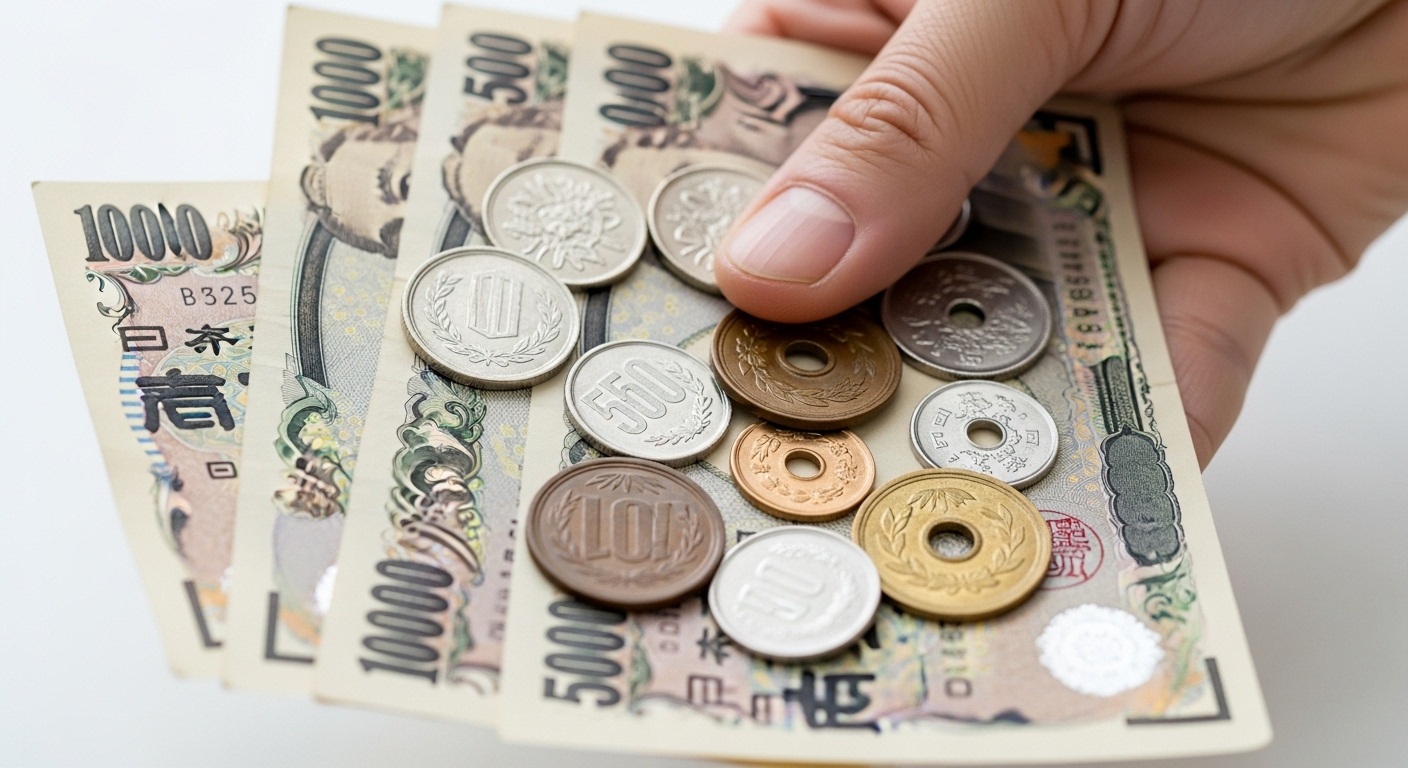
This is a pro-tip most people ignore until it’s too late. In Japan, the smallest bill is 1,000 Yen (about $7). Everything smaller is a coin (500, 100, 50, 10, 5, 1).
If you pay with a 1,000 Yen bill for a 150 Yen water, you get a fistful of heavy metal back. By Day 3, your pocket will weigh 5kg.
The Solution:
- Bring (or buy) a “Coin Purse.” Regular wallets aren’t big enough. You can buy a cute one at Daiso (100 Yen shop).
- Use your Suica/Pasmo: Pay for small things at convenience stores with your IC Card to avoid getting more coins.
5. A Beautiful Cultural Detail: The Tray
When you pay (cash or card), you will see a small plastic tray on the counter. Do not hand money directly to the cashier. It’s considered slightly rude or unhygienic.
- The Move: Place your money (or card) neatly in the tray.
- The cashier will pick it up, process it, and place your change/receipt back in the tray (or hand it to you with two hands).
- Take it, bow slightly, and say “Arigatou gozaimasu.”
Summary: Your Money Strategy
- Arrive with a little cash (maybe get $100 worth at your home airport just for peace of mind).
- Withdraw more Yen at a 7-Eleven ATM when you need it.
- Use Card/Suica wherever possible to avoid coins.
- Always carry 10,000 Yen for emergency Ramen.
See? No need to stuff cash in your socks. Now that you have your budget sorted, you can focus on the important stuff—like spending that Yen on amazing food and experiences.
Need help spending it wisely? Our tours are the best investment you’ll make on your trip. (And yes, you can book them online with a credit card!).