Kyoto for Beginners: How to Dodge the Crowds and Spot a Geisha (Respectfully)
You are going to Kyoto. Of course you are. It is the heart of traditional Japan. You have dreams of walking through silent bamboo forests, meditating in Zen gardens, and seeing a mysterious Geisha vanish around a corner.
But here is the “Best Friend” reality check: Kyoto is CROWDED.
Unlike Tokyo, which is huge and absorbs people easily, Kyoto is a small city with narrow streets. If you go to the famous spots at 11 AM, it feels like a packed subway train.
Do not let this ruin your trip. Kyoto is magical if you know how to navigate it. Here are my 4 Golden Rules for enjoying the ancient capital.
Rule #1: The “6 AM” Magic
I cannot stress this enough. You must wake up early.
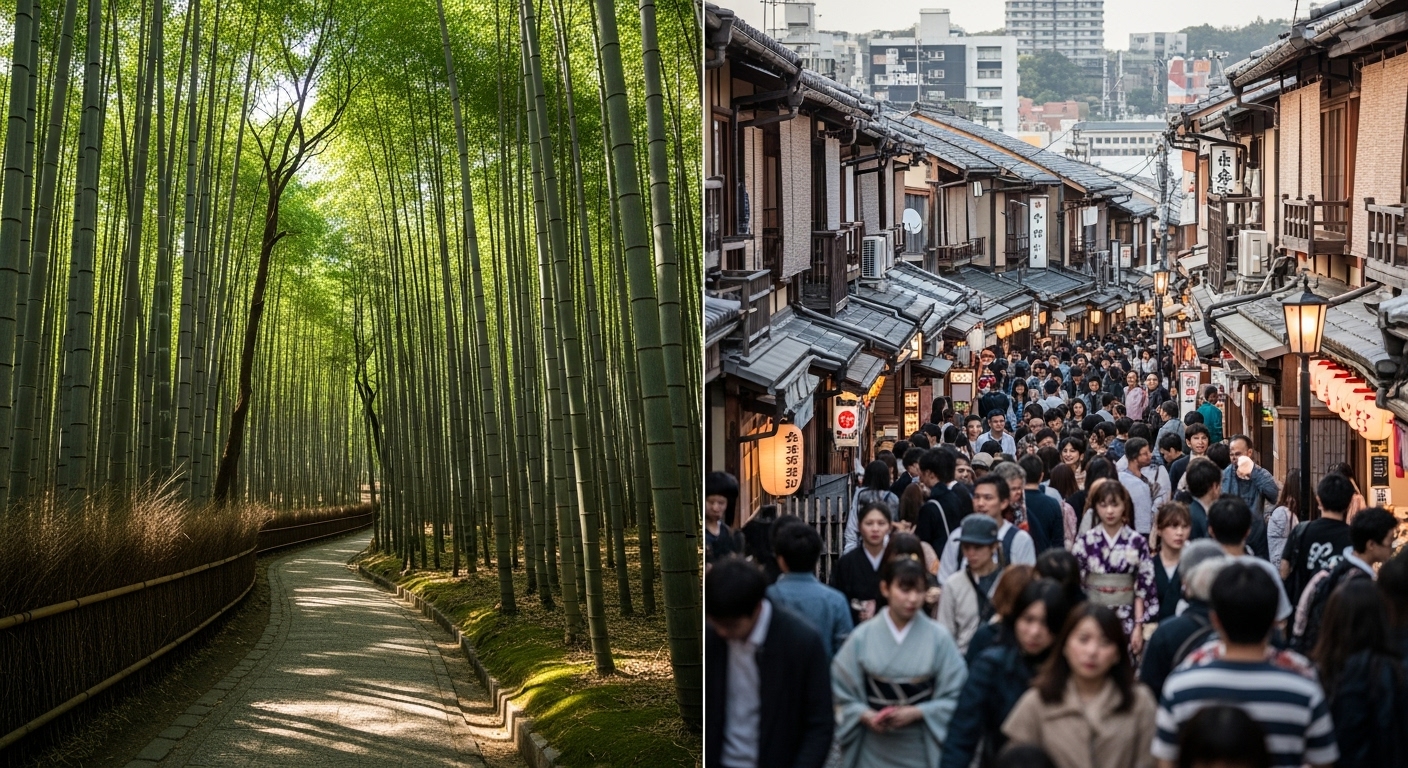
- Fushimi Inari (The 1,000 Red Gates): At 10 AM, it is a wall of Instagrammers. At 7 AM? It is empty, mystical, and spiritual.
- Arashiyama (Bamboo Grove): At noon, you see only the backs of other tourists’ heads. At 6:30 AM, you can hear the wind in the bamboo.
In Kyoto, the “Early Bird” doesn’t just get the worm; they get the Zen. Go back to your hotel and nap in the afternoon when everyone else is fighting the crowds.
Rule #2: Don’t Be a “Geisha Paparazzi”
You might visit the Gion district, hoping to see a Geisha (in Kyoto, they are called Geiko or Maiko). If you see one, you will be excited. She looks like a living painting.
BUT:
- DO NOT chase her.
- DO NOT block her path.
- DO NOT touch her kimono.
- DO NOT use flash photography in her face.
They are real people going to work. Recently, locals have banned photography in certain private alleys because tourists were too aggressive. Be cool. Watch from a distance. Admire them respectfully.
Rule #3: Skip the Bus, Rent a Bike (or Walk)
In Tokyo, the trains are king. In Kyoto, the subway network is limited, so most tourists take the bus. Result: The buses are packed and stuck in traffic.
The Solution:
- Rent a Bicycle: Kyoto is mostly flat and very bike-friendly. Riding along the Kamo River is one of the best experiences in the city.
- Walk: Many temple districts (like Higashiyama) are best explored on foot.
- Trains: Use the trains/subways for long distances, but avoid the bus if you can.
Rule #4: Eat “Obanzai,” Not Just Kaiseki
Kyoto is famous for Kaiseki (fancy, multi-course traditional dinners). You should try it once, but it’s expensive and formal.
For a real local meal, look for “Obanzai” (おばんざい).
- What it is: Traditional, home-style Kyoto cooking.
- The Vibe: Big bowls of stewed vegetables, tofu, and fish are laid out on the counter. You pick what looks good. It’s healthy, delicious, and feels like eating at a Japanese grandmother’s house.
The “Must-Visit” vs. “Hidden Gem”
- The Must-Visit: Kiyomizu-dera. Yes, it’s crowded, but the massive wooden stage is worth it. Go at sunset.
- The Hidden Gem: Nanzen-ji. It’s a huge temple complex with a fascinating brick aqueduct running through it. It’s popular, but rarely feels as suffocating as the Golden Pavilion (Kinkaku-ji).
Enjoy the Silence
Kyoto requires a bit more strategy than Tokyo. But when you find that quiet moment—sipping matcha in a garden while the leaves turn red—it is the most beautiful place on earth.
Want to see the real Gion without breaking the rules? Or want to know which temples allow you to enter the gardens? Our Kyoto Tours are designed to keep you away from the worst crowds and connect you with the deep history of the city.