Forget the Textbooks: The Only 5 Japanese Phrases You Actually Need to Survive
“Do I need to speak Japanese to travel in Japan?” I hear this fear all the time.
The honest answer? No. In Tokyo and major cities, signs are in English, trains have English announcements, and Google Translate exists. You will be fine.
BUT. If you want to connect with locals, get better service, and show respect, knowing a tiny bit of Japanese changes everything.
You don’t need to memorize a grammar book. In fact, textbook Japanese is often too polite and robotic. As your friend, I’m giving you my personal “Cheat Sheet.” These are the only 5 phrases you really need.
Magic Word #1: “Sumimasen” (SUE-ME-MAH-SEN)
The Meaning: “Excuse me” / “Sorry” / “Hey!” Why it’s King: This is the Swiss Army Knife of Japan. It solves everything.
- Bumped into someone? “Sumimasen!” (Sorry!)
- Need to call a waiter? “Sumimasen!” (Excuse me!)
- Need to get off a crowded train? “Sumimasen!” (Let me through!)
- Trying to ask a stranger for help? “Sumimasen…” (Hi, sorry to bother you…)
If you only remember one word, make it this one. It is the key to polite society.
Magic Word #2: “Arigatou Gozaimasu” (AH-REE-GAH-TOH GO-ZAI-MASS)
The Meaning: “Thank you very much.” Why it’s King: You know “Arigatou.” But adding “Gozaimasu” makes it polite.
- When leaving a shop/restaurant: Say this to the staff.
- When someone helps you: Say this with a small bow.
Friend’s Tip: Just “Arigatou” is casual (like “Thanks”). It’s okay for friends, but for strangers or staff, use the full version. It shows you have class.
Magic Word #3: “Kore Onegaishimasu” (KOH-REH OH-NEH-GUY-SHE-MASS)
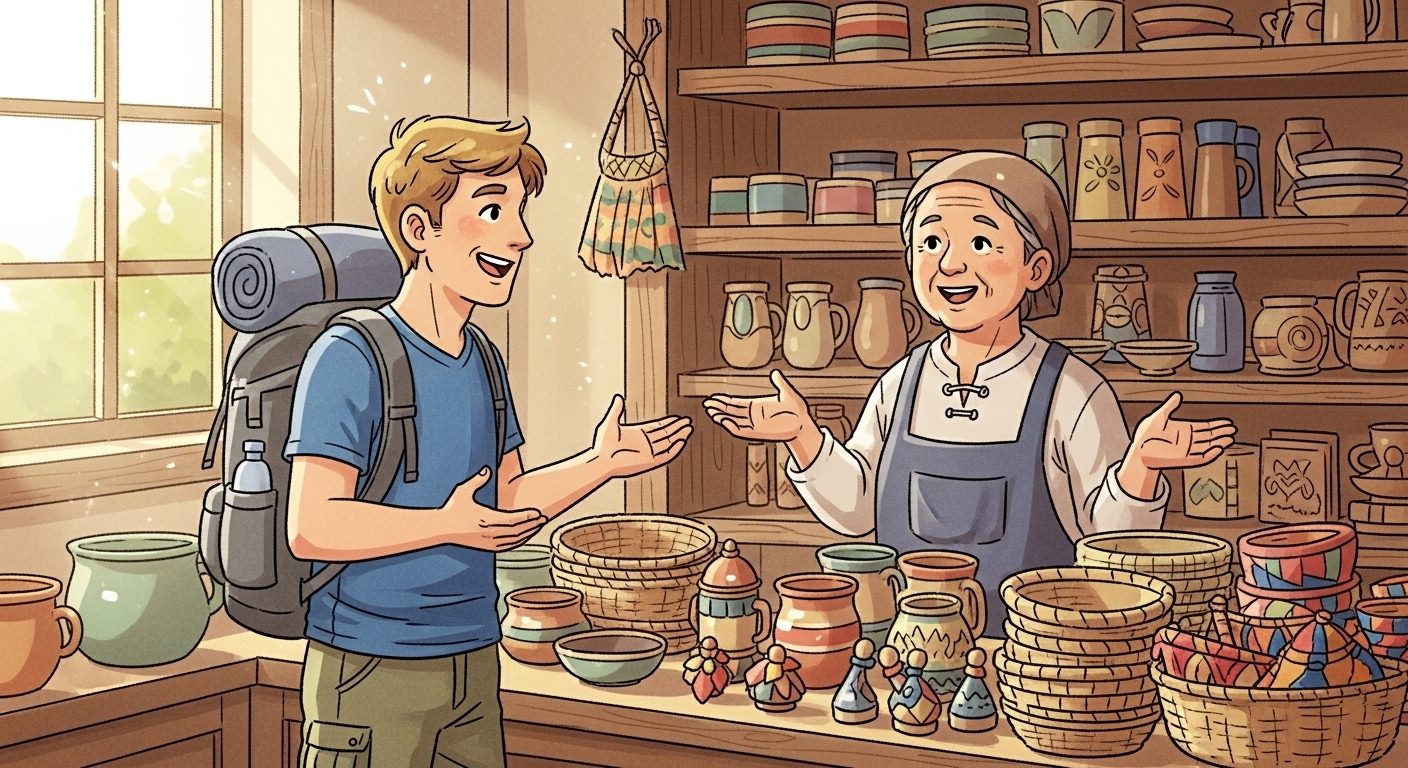
The Meaning: “This one, please.” Why it’s King: This is the ultimate ordering hack. You don’t need to read the Kanji menu. You don’t need to know the name of the food.
- Look at the menu (or the plastic food display).
- Point your finger at what you want.
- Say “Kore” (This) “Onegaishimasu” (Please).
You can order a 10-course meal just by pointing and using this phrase. It works for tickets, souvenirs, anything.
Magic Word #4: “Oishii!” (OH-EE-SHEE)
The Meaning: “Delicious!” Why it’s King: Japanese chefs and staff are shy, but they love to see you enjoy their food.
- Take a bite.
- Smile.
- Say “Oishii!”
You will see the chef’s face light up immediately. It’s the best ice-breaker in the world.
Magic Word #5: “Toire wa doko desu ka?” (TOY-REH WAH DOH-KOH DESS KAH?)
The Meaning: “Where is the toilet?” Why it’s King: Because… nature calls.
- “Toire” = Toilet.
- “Doko” = Where.
You can actually shorten this. Just look panic-stricken and say “Toire…?” People will point you in the right direction immediately.
Bonus: The Silent Language (The “X” and The Bow)
Sometimes, you don’t even need words.
- The Head Bow: A small nod/bow is the universal sign for “Yes,” “Thanks,” “Sorry,” and “Bye.” When in doubt, just bow slightly.
- The “X” Sign: If a staff member crosses their arms in an X shape, it means “No,” “Sold out,” or “Full.” Don’t argue. Just smile and walk away.
You Are Now Fluent (Enough!)
That’s it.
- Sumimasen to get attention.
- Kore Onegaishimasu to get what you want.
- Arigatou Gozaimasu to say thanks.
With these tools, you aren’t just a confused tourist anymore. You are a respectful guest. The locals will appreciate your effort more than you know.
Want to practice these phrases with a local who won’t judge your accent? Join our tours. We love teaching our guests the “real” Japanese slang that isn’t in the books!