When Should You Visit Japan? An Honest Guide to the 4 Seasons (and the One You Should Avoid)
“When is the best time to go to Japan?” I get asked this question almost every day.
Most people scream: “Spring! Cherry Blossoms! Sakura!” And sure, pink flowers are pretty. But is it really the best time for you?
Japan has four very distinct seasons (plus a sneaky fifth one). Each has a totally different vibe, price point, and… survival difficulty level.
As your friend, I’m going to give you the honest breakdown—including the season I secretly recommend the most.
1. Spring (March – May): The “Dream” Season
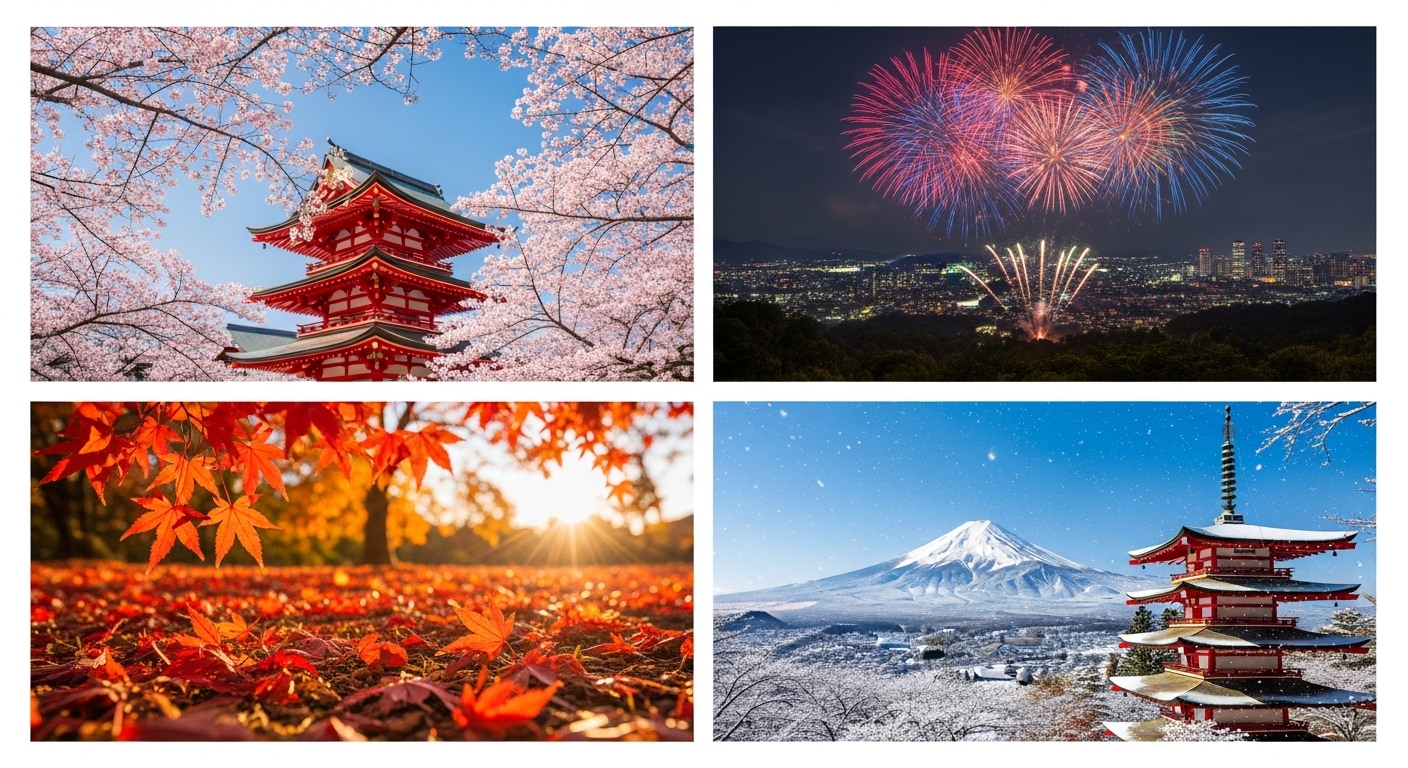
The Vibe: This is the Japan you see on Instagram. Pink cherry blossoms (Sakura), mild weather, and happy people having picnics in the park.
- The Good: It is undeniably beautiful. The temperature (15°C – 20°C) is perfect for walking.
- The Bad (The Truth): It is CROWDED. Kyoto during Sakura season is a human traffic jam. Hotels are at their most expensive prices of the year.
- Friend’s Verdict: Go if seeing Sakura is your #1 bucket list dream. But book your hotel 6 months in advance!
2. The “Sneaky” 5th Season: Tsuyu (June – Mid July)
The Warning: Be careful booking a trip in June. This is “Tsuyu” (The Rainy Season). It doesn’t rain every day, but it’s often gray, gloomy, and humid. You won’t see Mt. Fuji (it hides behind clouds).
- Friend’s Verdict: Unless you love hydrangeas (Ajisai) and museums, try to avoid this month.
3. Summer (July – August): The “Sauna” Season
The Warning: I cannot stress this enough. Japanese summer is HOT and HUMID. It’s not a “dry heat” like California. It’s a “walking through warm soup” heat. You will sweat instantly.
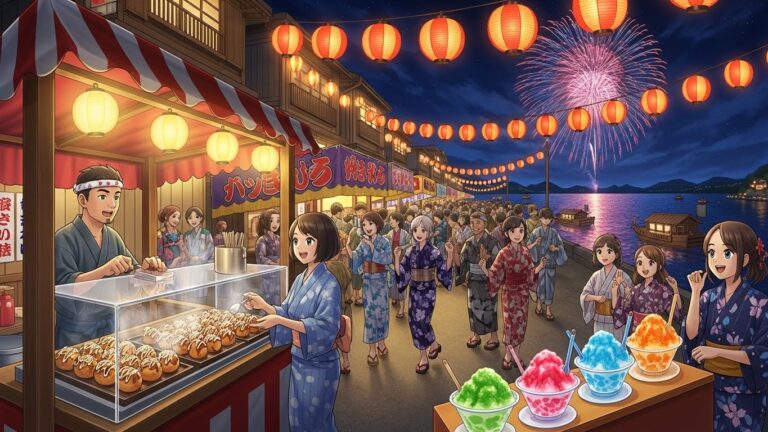
- The Good: This is the season of Festivals (Matsuri) and Fireworks (Hanabi). It’s loud, colorful, and energetic. Wearing a Yukata (summer kimono) and drinking beer at a street festival is a peak Japanese experience.
- The Bad: Heatstroke is real. You need to drink water constantly and rest.
- Friend’s Verdict: Come for the culture and festivals, but be prepared to sweat. A lot.
4. Autumn (September – November): The “Insider’s Pick”
The Vibe: Ask any local, and they will tell you: This is actually the best season.
- The Good:
- The Weather: The humidity vanishes. The air is crisp and cool.
- The Colors: The Autumn foliage (Koyo)—bright red maples and yellow ginkgo—is arguably just as beautiful as Sakura, but lasts much longer.
- The Food: Autumn is known as the “Appetite Season.” Fish is fatty, sweet potatoes are roasted on the street, and fruit is delicious.
- The Bad: Honestly? Nothing. It’s perfect.
- Friend’s Verdict: HIGHLY RECOMMENDED. Aim for late October to November for the best colors.
5. Winter (December – February): The “Budget & Beauty” Season
The Vibe: Clear blue skies, crisp air, and snow in the north.
- The Good:
- Mt. Fuji: Winter offers the highest chance of seeing Mt. Fuji clearly. In summer, she is shy and hides behind clouds.
- Seafood: Oysters, crab, and fish are at their peak deliciousness.
- Less Crowds: Apart from New Year’s week, it’s quieter and hotels are cheaper.
- Onsen: Soaking in a hot spring while the air is freezing? Heaven.
- The Bad: It’s cold (0°C – 10°C in Tokyo). You need a coat.
- Friend’s Verdict: If you hate crowds and love food/hot springs, come in winter.
Summary: Your Best Friend’s Ranking
- Winner: Autumn (Best weather, beautiful nature, great food).
- Runner-up: Winter (Clear skies, great Mt. Fuji views, fewer tourists).
- The “Classic”: Spring (Beautiful Sakura, but expensive and crowded).
- For the Brave: Summer (Amazing festivals, but brutal heat).
No matter when you visit, Japan has something magical to offer. Are you coming in the hot summer? We’ll take you to the best air-conditioned spots and night festivals. Coming in winter? We’ll show you the warmest Ramen shops.
Check our tour calendar to see what special seasonal events are happening during your trip!