Sushi Demystified: How to Eat Like a Pro (From Conveyor Belts to Fancy Counters)
You came to Japan for sushi. Obviously. But did you know there are two completely different “universes” of sushi here?
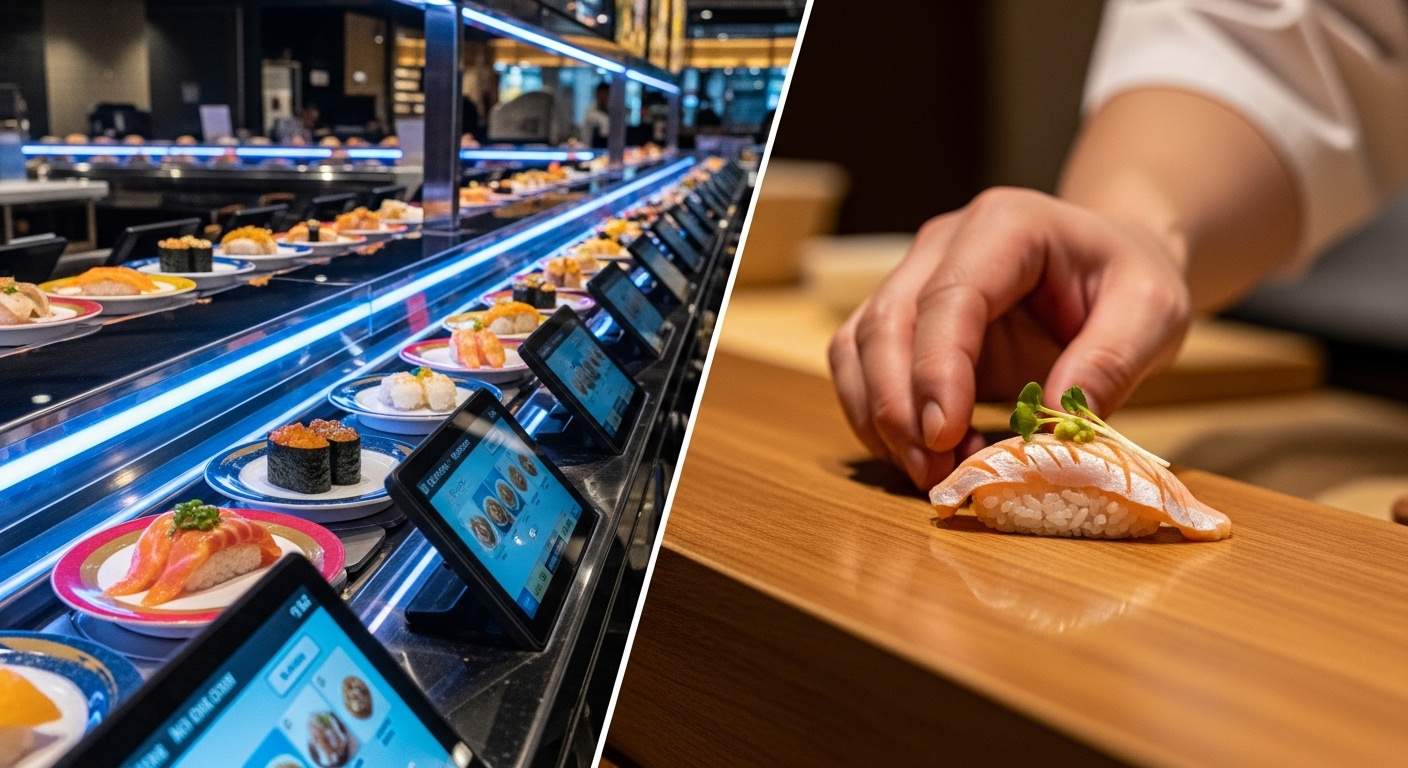
- The “Fun” Universe: Conveyor Belt Sushi (Kaiten-sushi).
- The “Serious” Universe: Counter Sushi (Omakase).
Many tourists get stuck in the first one because the second one looks intimidating. Silent chefs? No menu? Scary prices?
As your friend, I want you to experience both. Here is your crash course on how to navigate both worlds without making a mess.
Part 1: Kaiten-Sushi (Conveyor Belt) – The Fun & Cheap Choice
If you see a chain like Sushiro, Kura Sushi, or Hama Sushi, go in! These places are loud, high-tech, and incredibly cheap (plates start at around 120 JPY / $0.80).
- How it works: You sit at a booth. There is a touchscreen (usually in English). You order, and a “shinkansen” train zooms the sushi to your table.
- The Vibe: Anything goes. Order hamburger sushi. Order fries. Order beer. It’s a party.
- Friend’s Tip: Look for the “Matcha Powder” on the table. It’s not wasabi! Put a spoonful in a cup and add hot water from the tap at your table. Free green tea!
Part 2: Counter Sushi (Omakase) – The Real Deal
Ready to level up? Walking into a small, quiet shop with a wooden counter is where the magic happens. Don’t be scared. Just follow these “Best Friend” rules.
Rule #1: Don’t Make “Wasabi Soup”
This is the #1 mistake tourists make. Do not dump a lump of wasabi into your soy sauce dish and mix it into a brown sludge.
- Why? The chef has already put the perfect amount of wasabi inside the sushi (between the fish and rice).
- If you want more: Put a tiny bit of wasabi directly on top of the fish. Keep the soy sauce pure.
Rule #2: Flip It (Don’t Drown the Rice)
When you dip your sushi, dip the FISH, not the rice.
- Why? If you dip the rice, it soaks up too much sauce (ruining the flavor) and often falls apart in the bowl.
- How: Gently rotate the sushi to the side or upside down to touch the fish to the sauce.
Rule #3: Hands or Chopsticks?
Good news! You can use your hands. In fact, many connoisseurs prefer using their fingers for high-end sushi. It prevents the rice from being crushed. If you are bad with chopsticks, just use your hands. It’s perfectly polite.
Rule #4: One Bite Only
Do not bite the sushi in half. The chef designed that piece to be a perfect balance of fish, rice, and wasabi in your mouth. If you bite it in half, it falls apart and looks messy. Open wide and go for it!
Rule #5: The Ginger is a “Reset Button”
See that pile of pickled ginger (Gari)? It is not a salad. Do not put it on top of your sushi. It is a palate cleanser. Eat a slice between different pieces of fish (e.g., before switching from Tuna to Salmon) to reset your tongue.
What is “Omakase”?
At a counter, you might see the word “Omakase.” It means “I leave it up to you.”
If you order this, you don’t choose. The chef gives you piece after piece of whatever is freshest that day. It stops when you say “Stop” (or when the set course is finished). It’s expensive, but it is the ultimate sushi experience.
You’re Ready to Eat.
Sushi in Japan isn’t just food; it’s an art. But it shouldn’t be stressful. Whether you’re catching plates off a conveyor belt or watching a master chef slice tuna at a counter, the most important thing is to enjoy the freshness.
Still nervous about the “silent chef” at the counter? Join our Food Tour. We take guests to beginner-friendly authentic sushi counters where the chefs love chatting with travelers. Let us introduce you!