The Ultimate Ramen Guide: How to Order, Slurp, and Eat Like a Pro
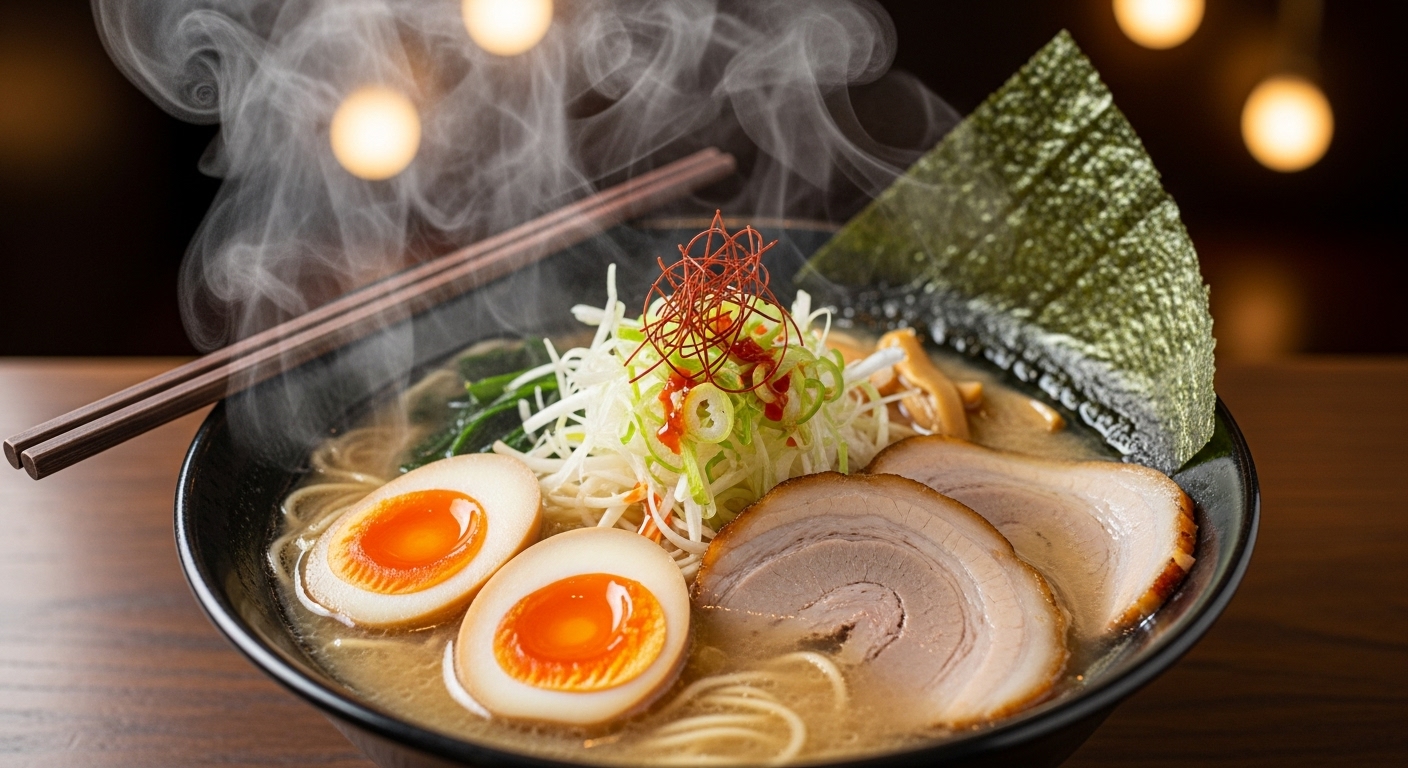
Ramen. It’s not just a soup. In Japan, it’s a religion.
You’ve probably heard of Ichiran (the famous booth-style ramen). And sure, it’s fun. But waiting 2 hours in line for it? As your friend, I have to tell you: You can do better.
Tokyo has thousands of ramen shops, each with its own secret recipe. But for a beginner, the menu can look like a code. Shoyu? Tonkotsu? Shio?
Don’t panic. Here is your crash course in Ramen 101. Master this, and you’ll never eat a bad bowl again.
1. Know Your Broth (The “Four Kings”)
Ramen is defined by its soup. Here are the four main types you need to know.
- 1. Shoyu (Soy Sauce):
- The Classic. Clear, brown soup made from chicken or vegetable stock and soy sauce. It’s light, nostalgic, and tangy. If you want “Tokyo Style” ramen, this is it.
- 2. Tonkotsu (Pork Bone):
- The Heavy Hitter. Milky, white, creamy, and thick. It’s made by boiling pork bones for hours (sometimes days!). It’s rich and “meaty.” This is the style famous in Fukuoka (and yes, it’s what Ichiran serves).
- 3. Miso (Soybean Paste):
- The Comfort Food. Originating from cold Hokkaido, this soup is thick, nutty, and slightly sweet. It often comes with corn and butter. Perfect for a cold winter day.
- 4. Shio (Salt):
- The Purist. A clear, golden soup seasoned with salt. It sounds simple, but it’s the hardest to make well because you can’t hide bad ingredients. It’s light and refreshing.
2. How to Conquer the “Ticket Machine”
Most authentic ramen shops don’t have waiters to take your order. They have a vending machine at the entrance. It usually has buttons with Japanese kanji. Scary, right?
Here is the strategy:
- Insert Cash First: The buttons won’t light up until you put money in. (Usually 1,000 JPY bills).
- Look for the “Top Left” Button: This is the golden rule. The shop almost always puts their “Number 1 Recommended / Most Popular” bowl on the top left button. If you can’t read anything, just press top-left. It’s a safe bet.
- Get the Ticket: Take the little paper ticket and your change.
- Hand it to the Chef: Sit down (or stand) and hand the ticket to the master behind the counter.
3. The Secret Vocabulary
Want to sound like a local? Learn these two words.
- “Kaedama” (Kaa-eh-dah-mah):
- Meaning: “Noodle refill.”
- Context: Mostly for Tonkotsu ramen shops. If you finish your noodles but still have soup left, shout “Kaedama please!” (You usually pay about 100-150 JPY extra).
- “Katamen” (Kah-tah-men):
- Meaning: “Hard noodles.”
- Context: Ramen nerds love their noodles firm, not soggy. When the chef asks for your preference, say “Katamen.” You’ll get a nod of respect.
4. To Slurp or Not to Slurp?
SLURP. Loudly. Proudly.
We’ve said it before, but with ramen, it’s essential. Why?
- Cooling: It cools the hot noodles as they enter your mouth so you don’t burn your tongue.
- Flavor: It aerates the soup (like swirling wine), bringing out the aroma.
If you eat silently, you aren’t tasting it fully. Make some noise!
5. Drink the Soup?
You don’t have to drink all of it (it’s a lot of sodium!), but taking a few sips from the bowl is a compliment to the chef. If you finish every drop, you might see a “Thank You” message written at the bottom of the bowl.
Ready to Eat?
Now you know the difference between Shoyu and Tonkotsu. You’re ready to walk past the long line of tourists at Ichiran and duck into that tiny, steam-filled shop next door where the locals are eating.
Still intimidated by the kanji menu? Or do you want to find the absolute best “hidden gem” ramen that hasn’t been discovered by TikTok yet?
Join our Food Tour. We’ll take you to our favorite secret spots, order for you, and introduce you to the master. Let’s go get sloppy.